
Salalah, Oman: A Local's Guide to the Country's Green South
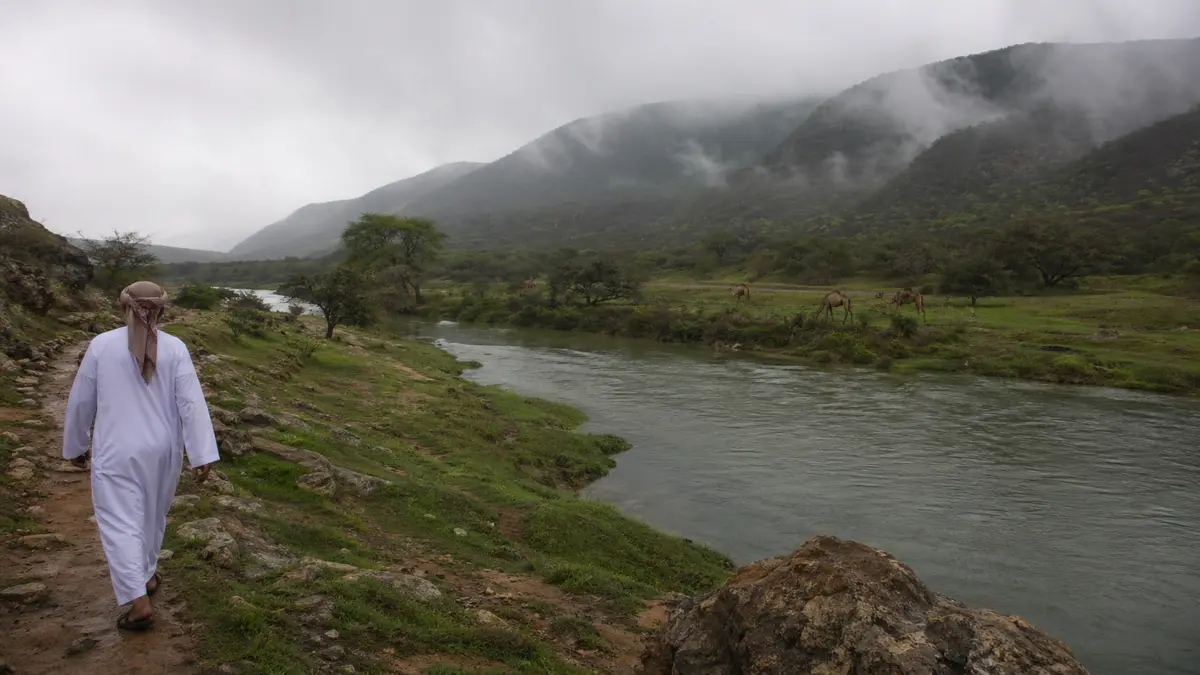
Travel writers like to call Salalah "the Caribbean of the Orient." Said Samhan, who was born here, finds this strange.
"When someone says that," he tells us, "I know they haven't been here yet. Salalah isn't the Caribbean. Salalah is Salalah. We have waterfalls that flow into a desert. We have frankincense trees that have grown here for five thousand years. We have a monsoon that turns a desert city into something resembling the Scottish Highlands for three months a year. Which Caribbean island can do that?"
If you're reading this, you're probably planning a trip to Oman — or you've already booked one and are wondering whether Salalah is worth the long flight south. The short answer is yes. The long answer is below.
This isn't a top-10 listicle. It's the guide we'd give a friend coming to visit.
Salalah in 60 Seconds
Salalah sits at the far southern tip of Oman, in the Dhofar Governorate — more than 1,000 kilometers from Muscat, and geographically closer to Yemen than to its own capital. This is where the Arabian Peninsula ends and the Indian Ocean takes over.
What makes Salalah unique is a meteorological accident. While the rest of Arabia bakes at 45°C in summer, Dhofar catches the tail end of the Indian monsoon. For three months — June through September — the desert turns green. Waterfalls appear out of dry valleys. The mountains look like they've been transplanted from Wales.
The rest of the year, Salalah is a relaxed subtropical coastal city: 25–30°C, long quiet beaches, an old market, and a frankincense heritage stretching back to the Queen of Sheba.
In three sentences:
- Salalah is not Muscat. It's slower, greener, more remote.
- It's only 1.5 hours from Dubai by plane — but culturally on a different planet.
- If you want to understand Oman, this is where to start.
Is Salalah Worth Visiting?
A direct answer: yes, but only if you understand what you're coming for.
Salalah is not a luxury beach resort destination, although a few good resorts exist. It's not a nightlife city. It's not Dubai. If you're looking for skyline, brunches, and shopping malls, you'll be disappointed.
What Salalah offers instead:
- Landscape variety unmatched in Arabia. Within a single day you can drive from white-sand beaches to mountain wadis to the edge of the Empty Quarter desert.
- Cultural depth. Dhofar is geographically and culturally distinct from northern Oman — it has its own language (Jibbali), its own architecture, its own cuisine.
- Untouristed atmosphere. Despite growing fast, Salalah still feels local. You'll meet more Omani families than European tour groups.
- One of the world's strangest weather phenomena, and the only place in Arabia where you can experience it.
If those things appeal to you, Salalah is worth the journey. If you're chasing a generic Middle East beach holiday, Dubai is closer and easier.
Is Salalah Safe?
Yes. Demonstrably so.
Oman ranks consistently among the safest countries in the world — typically in the top 10 of the Global Peace Index, ahead of most European countries. Salalah specifically has near-zero violent crime against tourists, no political tension, and no terrorism activity in recent decades.
Practical things that surprise first-time visitors:
- Women can travel independently. Modest dress (covered shoulders and knees in public, swimwear fine on hotel beaches) is appreciated, not required by law.
- Solo travel is common and welcomed. Omani hospitality is genuine, not performative.
- Roads are excellent. Self-driving is realistic if you're comfortable on Arabian roads.
- The only real risks are the natural ones — flash floods in wadis during heavy rain, and the sea, which has strong currents on some Salalah beaches.
The UK Foreign Office and US State Department both have minimal advisories for Oman. The country borders Yemen, but the Dhofar–Yemen frontier is far from any tourist area and well-controlled.
Salalah vs. Muscat — An Honest Comparison
Most first-time travelers to Oman land in Muscat and treat Salalah as an afterthought. This is a mistake. Both cities are excellent, but they serve different kinds of travelers.
Said's recommendation: "If you only have a week, pick one. If you have ten days, do both — but plan three full days minimum in Salalah. Less is a waste."
The direct flight between Muscat and Salalah takes 90 minutes. SalamAir and Oman Air both serve the route multiple times a day.
The 12 Things in Salalah Actually Worth Your Time
We've ordered these by geography, starting in the city and moving outward. Most can be visited in a 4–5 day stay if you have a car or guide.
1. Al Haffa Beach & Al Husn Souk
In the old part of town, Al Haffa is Salalah's most authentic stretch of coast — no resort wall, no entrance fee, just locals walking along the water at sunset. The souk next to it is where Omani families buy their frankincense. If you've never seen the resin in raw form, this is the place. Buy from the shop with the smallest crowd; quality is usually higher.
2. Sultan Qaboos Mosque
Salalah's main mosque — smaller than the famous one in Muscat, but architecturally just as composed. Open to non-Muslim visitors outside prayer times. Free.
3. Museum of the Frankincense Land
Part of the Al Baleed Archaeological Park. The exhibits walk you through 5,000 years of frankincense trade — from ancient Egypt to today. If you visit nothing else cultural in Salalah, visit this. It explains why Dhofar exists in world history at all.
4. Al Baleed Archaeological Park (UNESCO)
The ruins of a medieval port city that once traded with China and East Africa. Right on the water. Best at sunset, when the call to prayer carries across the lagoon and the light hits the standing walls.
5. Sumhuram & Khor Rori (UNESCO)
About 40 minutes east of the city, Sumhuram was the ancient world's primary export port for frankincense. Khor Rori — the lagoon below — is now a bird sanctuary; flamingos, herons, and migratory birds are common. Two hours covers both comfortably.
6. Job's Tomb (Nabi Ayoub)
Up in the mountains north of Salalah, this is where the prophet Job is said to be buried — a site venerated by Muslims, Jews, and Christians. The tomb itself is modest. The viewpoint behind it, looking down over the Dhofar plain, is what most visitors remember.
7. Wadi Darbat
During Khareef (June–September), Wadi Darbat is a fully flowing river with a real waterfall. Outside Khareef, it's a quiet valley with green hills and a permanent lake. About one hour from the city. Take a small boat across the lake if you have time.
8. Mughsail Beach & the Blowholes
30 minutes west of the city. Mughsail is a long white-sand beach backed by limestone cliffs. At one end, sea pressure forces water up through cracks in the rock — natural geysers that shoot meters into the air at high tide. Time your visit with the tide chart.
9. Wadi Dawkah Frankincense Park
A UNESCO-protected reserve with the original frankincense trees that supplied the ancient world. The trees look almost dead — gnarled, low, growing out of cracked earth. They're not. They're just old. 45 minutes from the city.
10. Taqah Castle
A small restored fort halfway between Salalah and Sumhuram. Worth a 30-minute stop if you're driving past. Good views from the roof.
11. Mirbat
A 90-minute drive east of Salalah, Mirbat was once one of the wealthiest trading ports on the Arabian Sea. The old town has crumbling merchant houses with carved wooden doors that are slowly being restored. Wear good shoes — the streets are uneven. The 1972 Battle of Mirbat is also a small piece of British military history, if that interests you.
12. Empty Quarter Edge
Three to four hours north of Salalah, the Rub al-Khali — the Empty Quarter — is the largest sand desert on Earth. You can drive to its edge in a 4×4 and watch the dunes go on to the horizon. This is not a place to go alone, and not on a day trip from Salalah unless you start before dawn. Better as part of a guided desert tour.
What Travel Guides Miss
The 12 sights above are the obvious ones. Here are five places we take friends to that almost no guidebook mentions.
Wadi Sanaq. A two-day hike east of Hasik takes you to a hidden valley with blue spring pools and palm groves where the freshwater meets the Arabian Sea. We've yet to see another tourist there. (Yes, this is one of the trails Sariba runs.)
Frankincense Trails on Foot. Most people see the Frankincense Park from a parking lot. The trails Bedouin traders used for centuries still exist. Walking even a small section gives you a different sense of what Dhofar was — and is.
The Dhofari breakfast at a roadside place called Ittin. No sign in English. Mutton stew, fresh khubz bread, sweet tea, served on the floor. Locals will look at you for a second when you walk in, then make space. This is the kind of meal you remember years later.
The hidden coves past Mughsail. If you keep driving past the blowholes for 20 minutes, the cliffs drop down to a series of small beaches no one visits. Bring water; there's no shade.
Salmah Plateau. A high-altitude grassland where Bedouin families still spend the summer with their camels and goats. Outside Khareef, it's quiet and beautiful. During Khareef, it's the closest thing to Switzerland you'll find in Arabia.
The Frankincense Story (and How to Buy the Real Thing)
Frankincense — luban in Arabic — is what made Dhofar wealthy for three thousand years. It's the dried sap of the Boswellia sacra tree, which only grows in a narrow strip of mountains on this coast.
For most of antiquity, frankincense was worth more than gold by weight. The Romans, Egyptians, and Persians all bought it from Dhofari traders. Caravans of camels carried it north across Arabia to the Mediterranean. It was burned in temples, used in medicine, given as a royal gift — including, according to the New Testament, to a baby in Bethlehem.
The trade quietly continued for two millennia, then faded with the rise of synthetic perfumes in the 20th century. Today it's making a slow comeback, both as an essential oil and in its raw resin form.
How to buy it well in Salalah:
- Look for clear, pale yellow-to-amber resin. The whiter it is, the higher the grade.
- Avoid anything ground into powder or mixed with other things. That's usually the lowest-quality leftover.
- The Hojari grade is the best. Expect to pay accordingly — real Hojari is not cheap.
- Buy from Al Husn Souk in Al Haffa. The vendors there are mostly direct sellers, not middlemen.
- Ask the seller to burn a small piece for you. The smell tells you more than the price tag.
A small bag of high-grade frankincense makes a far better souvenir than another fridge magnet.
Beaches in Salalah
Salalah has roughly 60 kilometers of coastline. Most of it is empty. A few highlights:
Al Mughsail. The most famous, for good reason. Long, white, dramatic. Comes with the blowholes attraction.
Al Haffa. In-town beach, calm, family-friendly. Good for sunset walks.
Fazayah. The beach of beaches — but a serious 4×4 drive to reach. If you can get there, you may have it to yourself.
Mirbat. Less for swimming, more for the surrounding old town and the small fishing harbor.
A note on swimming. Salalah's currents can be strong, especially during and right after Khareef. Locals will tell you which beaches to avoid. Always ask. Some have rip tides that look like calm water.
Salalah Practicalities
How to get there
Salalah has a small international airport with direct flights from Dubai, Muscat, Doha, Kuwait City, Jeddah, and several Indian cities. Direct flights from Europe are rare but increasing — currently the easiest route from London is via Dubai or Muscat.
Where to stay
Salalah's hotel scene has improved fast in the last five years. Three categories worth knowing:
- Resort hotels along the beach (Al Baleed, Crowne Plaza, Hilton, Rotana) — solid, comfortable, conventional.
- Boutique stays in the old town and inland — fewer in number but more interesting.
- Desert and mountain camps outside the city for 1–2 night experiences.
We're biased about the camp option, of course. A good night under stars in the Dhofar interior is the experience most travelers say they remember longest.
Getting around
Renting a car is the simplest option for independent travelers. Roads are excellent and well-signposted. Distances look small on a map but driving times are longer than expected — an "hour" usually means 90 minutes once you account for slow patches and viewpoints.
For travelers who want to focus on the experience rather than navigation, hiring a driver-guide is reasonable in cost and gives you context the road signs can't.
How long to stay
- Three days: the absolute minimum to see Salalah without rushing. City + Mughsail + Wadi Darbat.
- Five days: comfortable. Adds Mirbat, Sumhuram, Frankincense Park, the eastern coast.
- A week: ideal if you want to include a desert overnight or a hike.
- Ten days: the start of really seeing Dhofar properly.
FAQ
Is Salalah worth a visit if there's no Khareef?
Absolutely. Khareef is unique, but the rest of the year offers the dry-season landscape that most of Arabia looks like — except Salalah does it with better beaches, better wadis, and fewer tourists. November through March is the most comfortable weather window for European visitors.
How many days do you need in Salalah?
Three days is the minimum for the city and immediate surroundings. Five to seven days lets you reach the eastern coast and the desert edge without feeling rushed.
Can I combine Salalah with Muscat in one trip?
Yes, and we recommend it for first-time visitors. A 7-day itinerary can comfortably do four nights in Muscat and three in Salalah. Domestic flights connect the two in 90 minutes.
Is Salalah good for a beach holiday?
Yes — between November and April. Avoid Khareef (June–September) if beach time is your priority; the sea gets rough, the sky is overcast, and most beach activities pause. Khareef is incredible, but it's not a sun-and-swim season.
How does the Empty Quarter desert factor in?
The Rub al-Khali is reachable on a long day from Salalah, but realistically deserves an overnight. We run desert programs that connect Salalah to the desert edge; this is the kind of experience that's hard to organize independently.
What should I wear in Salalah?
Modest by Western standards but not strictly so. Covered shoulders and knees in public spaces. Swimwear is fine on hotel beaches. For mosques, women cover their hair (a scarf is usually provided). For wadis and beaches, normal travel wear is fine.
Can I drink alcohol?
Yes, in licensed hotels and a few specific restaurants. Public drinking is not done. Don't bring more than the duty-free allowance.
H2: If You Want to See the Salalah We Know
Most of what we've described above can be done independently with a rental car and a good map. Some things — the Empty Quarter, the Bedouin breakfast spots, the Wadi Sanaq trail, the conversations with frankincense families that take an afternoon and only happen in Arabic — can't.
That's the part we do.
If you'd like the version of Salalah that comes with a Bedouin guide who grew up here, our tour overview is the place to start. We don't run scheduled departures with strangers; everything is private or small-group, paced to what you actually want to see.